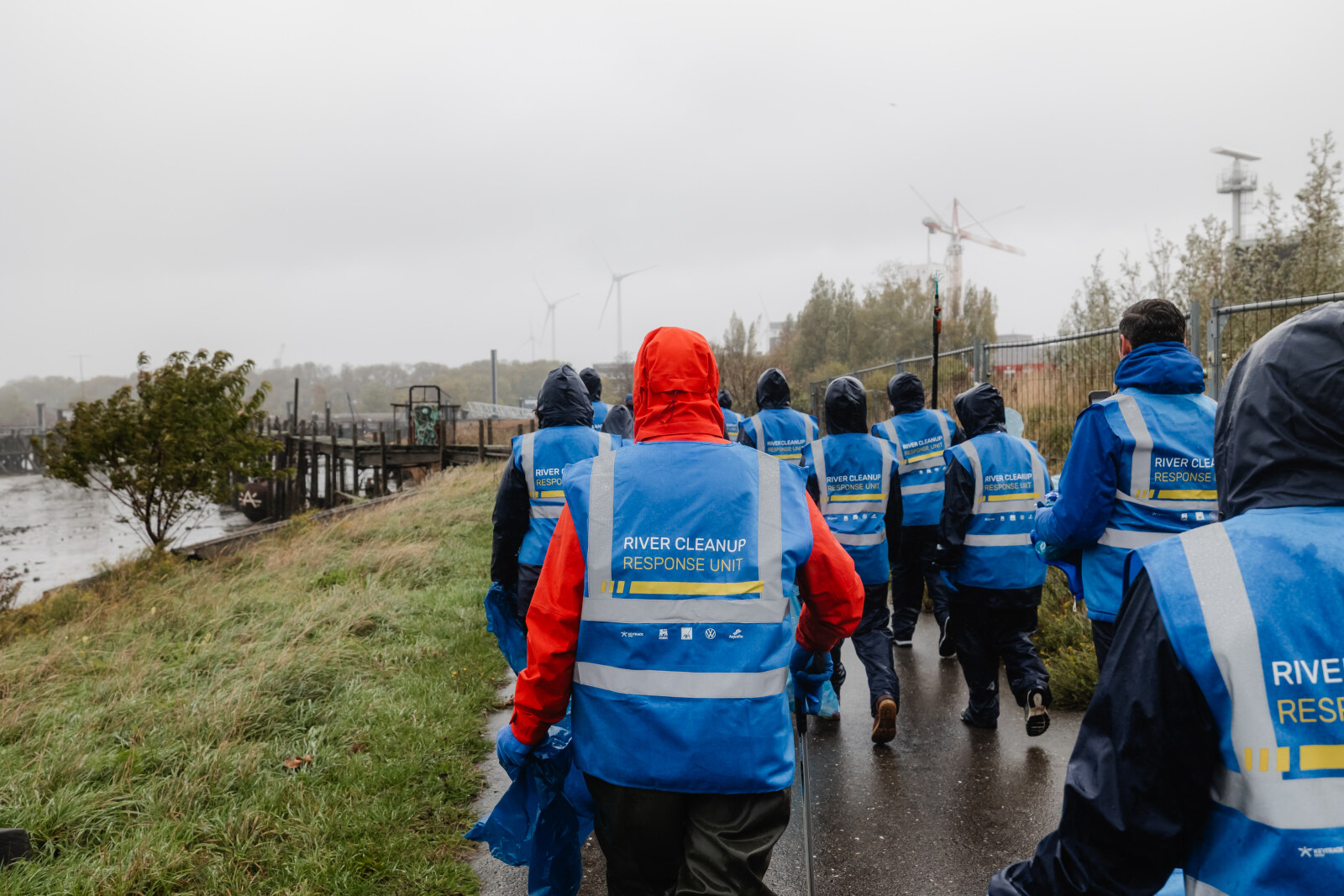
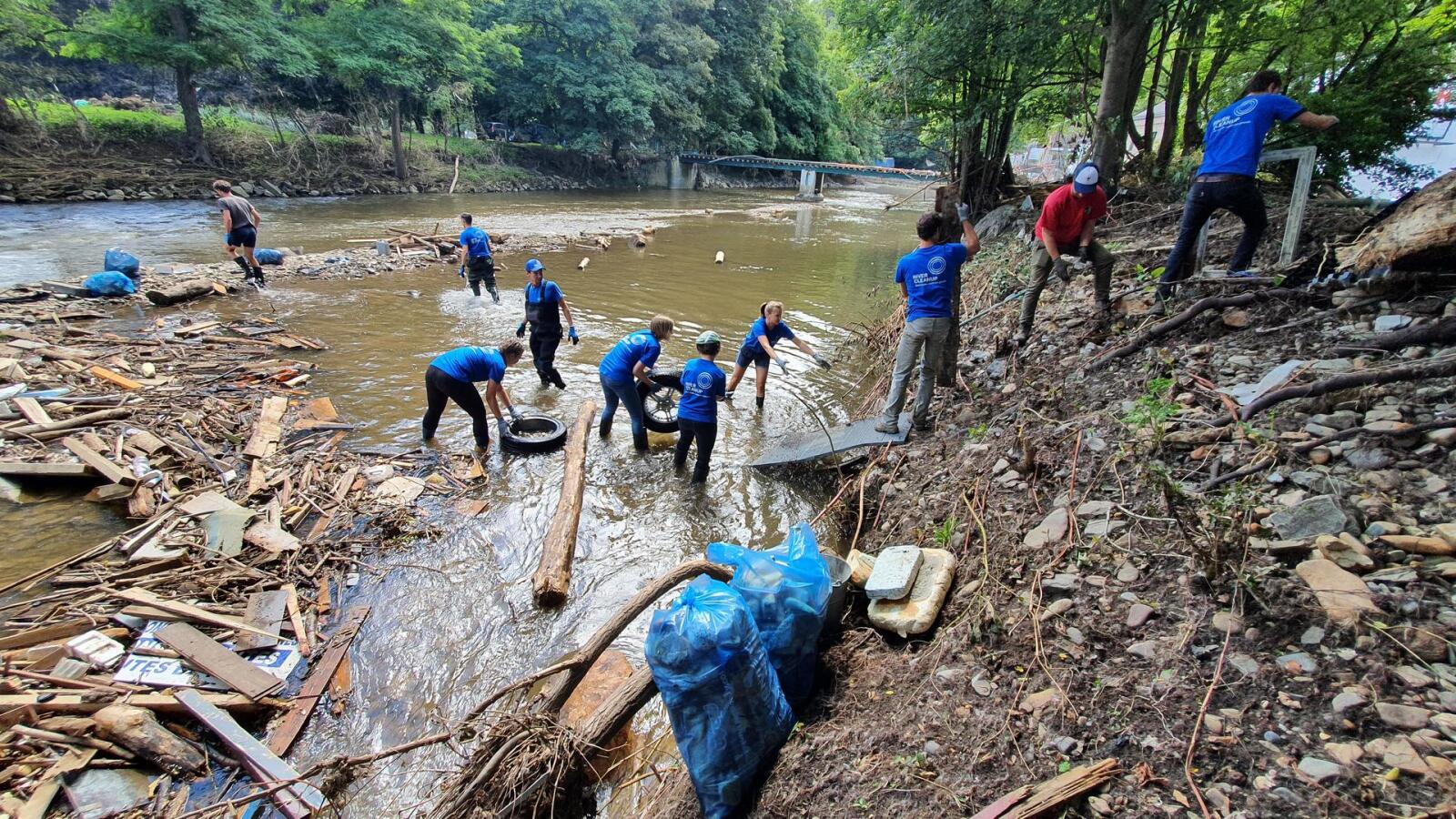
During floods, every moment counts. As waters recede, they leave behind mud, debris, and massive amounts of waste. That is why the Belgian non-profit organization River Cleanup is launching a specialized division: the River Cleanup Response Unit. This rapid-response team can be deployed shortly after floods to remove waste from the most vulnerable areas before it spreads further, reducing harm to people and the environment.
The idea for the Response Unit took shape four years ago, after the devastating floods that hit Wallonia in July 2021. Rivers such as the Vesdre and the Ourthe overflowed, turning streets into raging torrents. Entire households were swept away, along with tons of waste that ended up in nature. River Cleanup mobilized immediately. Over the course of 255 cleanup operations, 7,500 volunteers worked across the affected regions. Even with that massive effort, the cleanup took three years to complete.
Building on experience
Since the 2021 floods, River Cleanup has steadily built expertise in post-flood waste removal. The organization learned how to identify priority zones, manage logistics, deploy volunteers safely, and coordinate effectively with local authorities and emergency services. That experience now comes together in the River Cleanup Response Unit—a dedicated team with clear procedures, defined roles, and specialized equipment. The unit focuses exclusively on post-flood cleanup and does not intervene during the acute emergency phase, which remains the responsibility of first responders. However, preparations begin immediately after a flood, so the Response Unit can be deployed as soon as water levels drop and conditions are safe, typically within one to two weeks. In collaboration with municipalities, fire brigades, and the Red Cross, the team targets waste removal in hard-to-reach areas, including under bridges, along steep riverbanks, and in flooded zones. Whenever possible, collected materials are sorted and recycled. In its first phase, the Response Unit plans to carry out approximately 10 interventions per year.
“In recent years, we’ve seen how much damage flood debris causes long after the waters recede. It blocks waterways, harms ecosystems, and creates health risks for people and wildlife. Often, the waste lingers for weeks—caught under bridges or washed up on riverbanks—serving as a daily reminder of the disaster. With the River Cleanup Response Unit, we want to act faster and more systematically during that phase, so nature and communities can recover sooner. Floods are unpredictable, but our preparation doesn’t have to be.”
Thomas de Groote, founder and CEO of River Cleanup
Training volunteers: from kayaks to rope systems
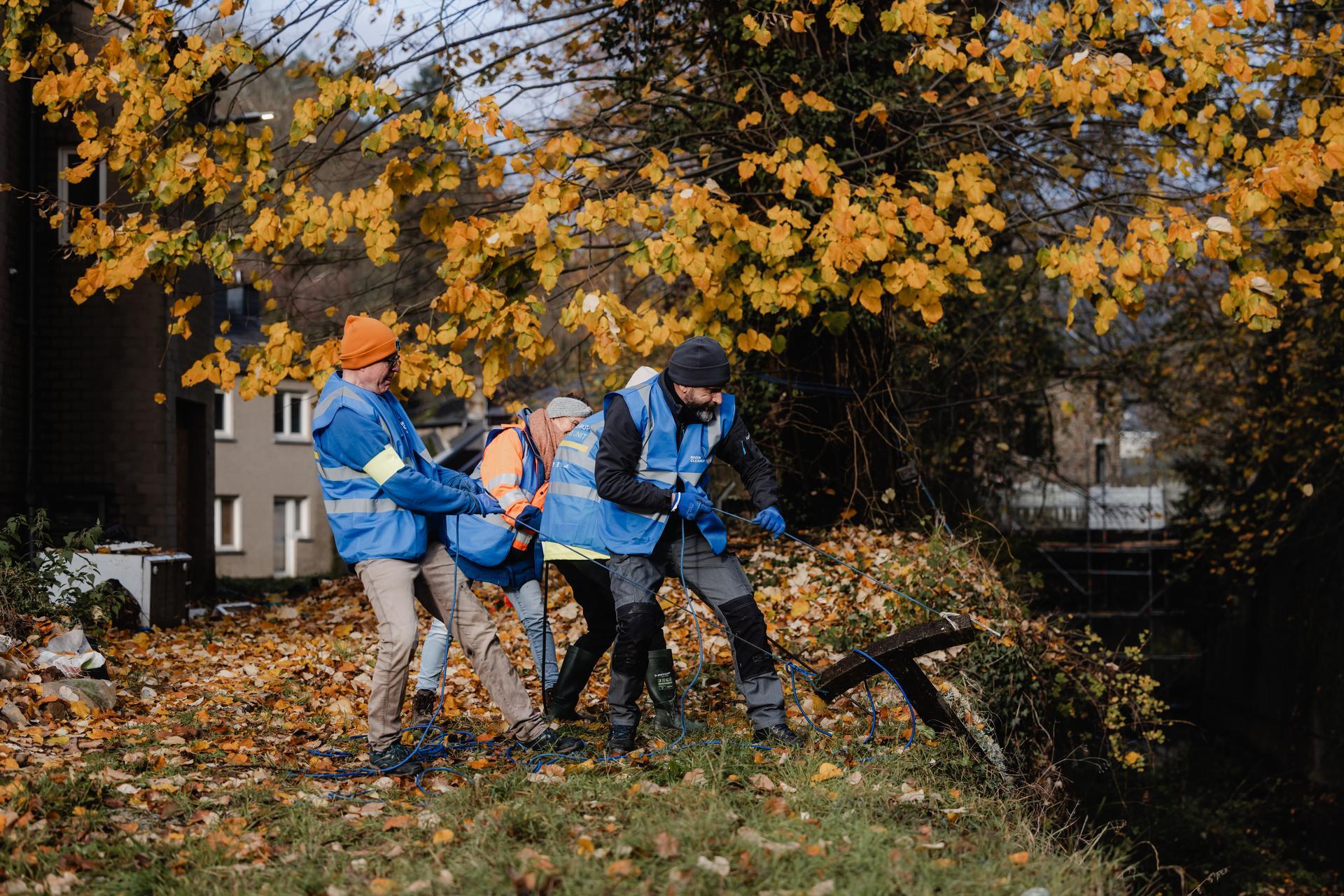
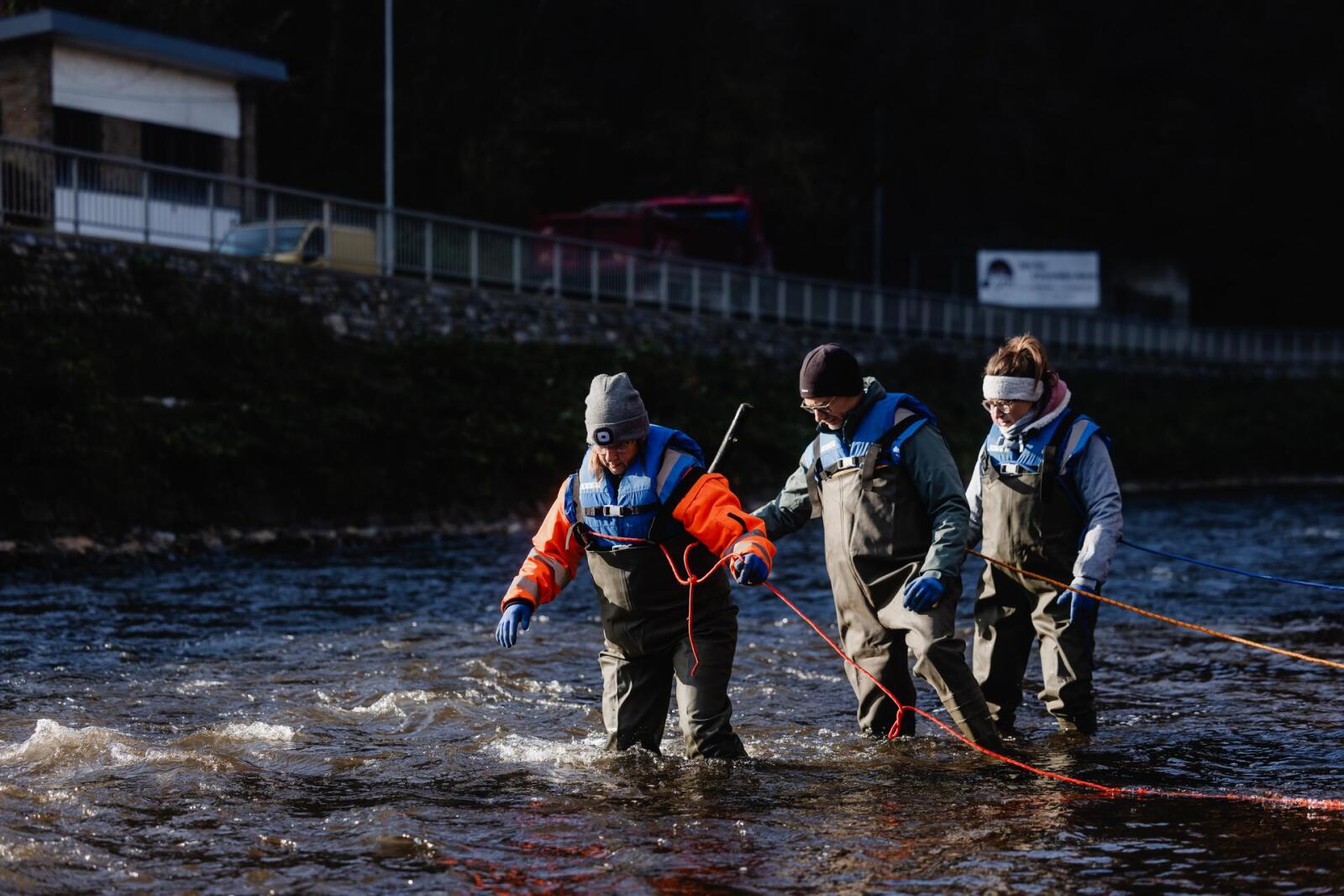
To ensure fast and safe deployment, River Cleanup organized three one-day training sessions this fall, reaching around 40 people. Volunteers learned specialized cleanup techniques, safety procedures, and how to use professional equipment. Through a combination of classroom briefings and practical exercises, they practiced operating kayaks in flowing water, working with protective wading gear, and using pulley-and-rope systems to remove heavy or hazardous debris from water or trees. These trainings showed which techniques work best in different situations and how to apply them safely. Thanks to this first round of training sessions, a core group of approximately 50 well-prepared volunteers is now ready to be deployed when the next flood hits.
-1600.jpg)
Strong partners for a fast response
River Cleanup works closely on this project with five structural partners: Aquafin, AXA, Delhaize, Volkswagen, and Keytrade Bank. Their contributions go beyond funding. Employees from several partners also volunteer during operations. Aquafin, for example, allows staff to participate without taking personal leave, ensuring that trained support is always available.
Call to action: become a Response Unit volunteer
Want to help nature and communities recover after disasters? River Cleanup is now building a database of trained volunteers from all backgrounds and experience levels—from those who prefer easily accessible areas to those comfortable operating under bridges or in moving water. All volunteers receive dedicated training in safety, equipment, and procedures, and always work in coordinated teams alongside local authorities and emergency services.
Volunteers can register here on the River Cleanup website.