-responsive.jpg)
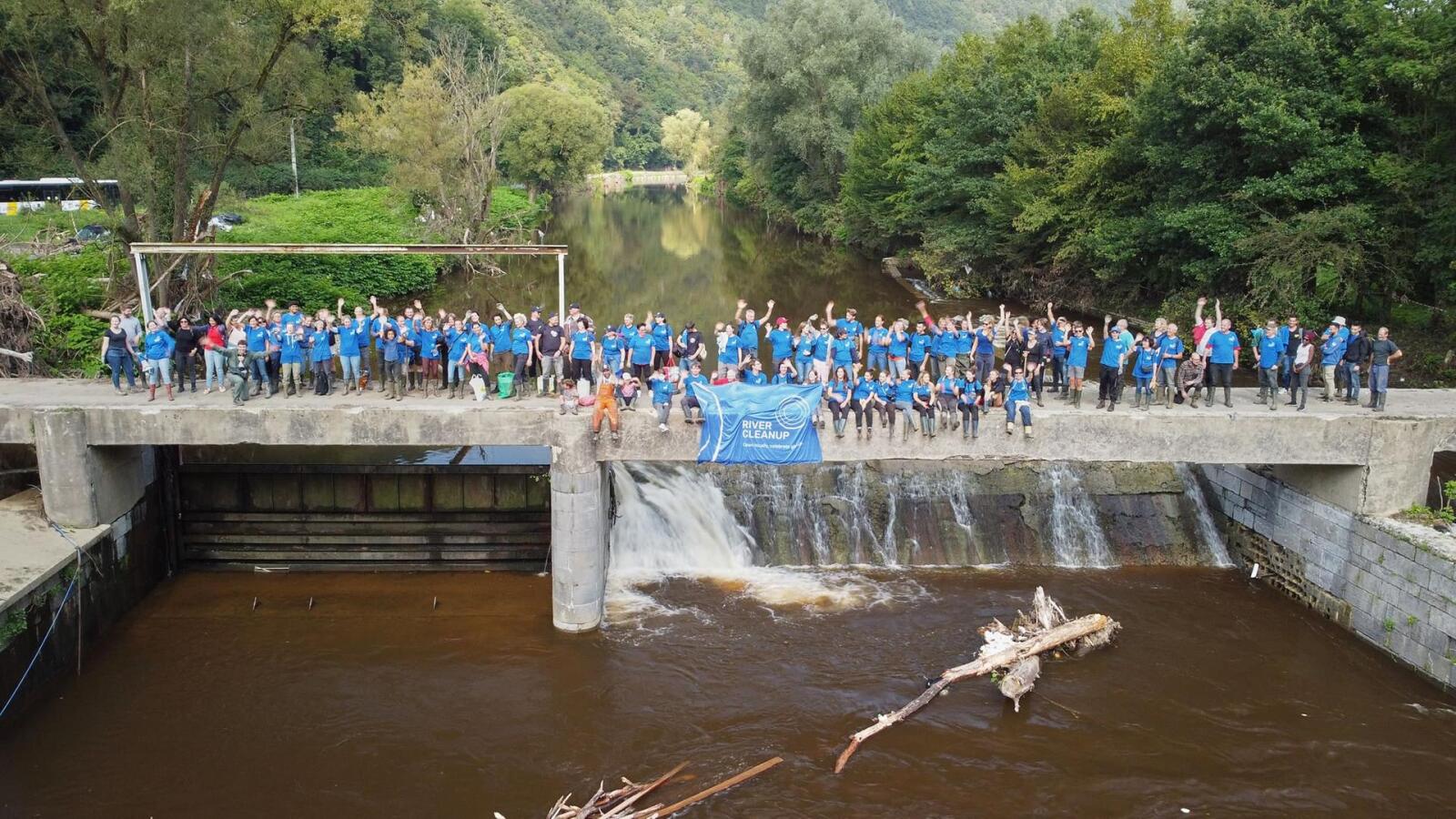
Just weeks before the fifth anniversary of the devastating floods that struck Belgium, the River Cleanup Response Unit carried out its first real-world cleanup operation on Saturday, June 20. Created in the aftermath of the disaster to strengthen citizen preparedness for climate-related events, River Cleanup's specialized response team was deployed to Sombreffe to remove waste left behind by the floods that affected several Belgian municipalities at the end of May.
Together with around thirty volunteers, the teams worked along waterways and riverbanks impacted by the recent severe weather. Despite extreme heat, participants removed nearly 400 kilograms of waste, demonstrating extraordinary motivation and commitment. This first intervention marks the transition from preparation to action.
A PROGRAM BORN FROM THE 2021 FLOODS
Nearly five years ago, the historic floods that struck Wallonia left behind far more than flooded streets and damaged homes. Thousands of pieces of waste were scattered throughout rivers, riverbanks, fields, and natural areas. In response to the emergency, River Cleanup mobilized more than 7,500 volunteers to support cleanup efforts.
This exceptional mobilization also highlighted an often-overlooked reality: when media attention fades and the waters recede, significant pollution remains in the environment. It was from this experience that the River Cleanup Response Unit was created, a specialized team designed to respond quickly after floods and reduce the environmental impact of waste left behind by floodwaters.
A FIRST FULL-SCALE DEPLOYMENT
On May 30, severe storms caused flooding and mudslides across several Belgian municipalities. In some areas, water levels matched or even exceeded those recorded during the 2021 floods.
Since its creation, the River Cleanup Response Unit has been preparing for exactly these kinds of situations through training sessions, field exercises, and the development of specialized procedures.
Among the initiatives carried out in recent months was a large-scale training exercise on June 10 involving 240 employees from AXA Belgium, designed to familiarize future volunteers with post-disaster response techniques.
This long-term preparation work found its first practical application on Saturday, June 20, when the River Cleanup Response Unit was deployed in the field for the first time since its creation. Equipped with waterproof waders, walking poles, and specialized equipment, volunteers were able to access areas made difficult to reach by accumulated mud and recover waste trapped in vegetation and waterways.
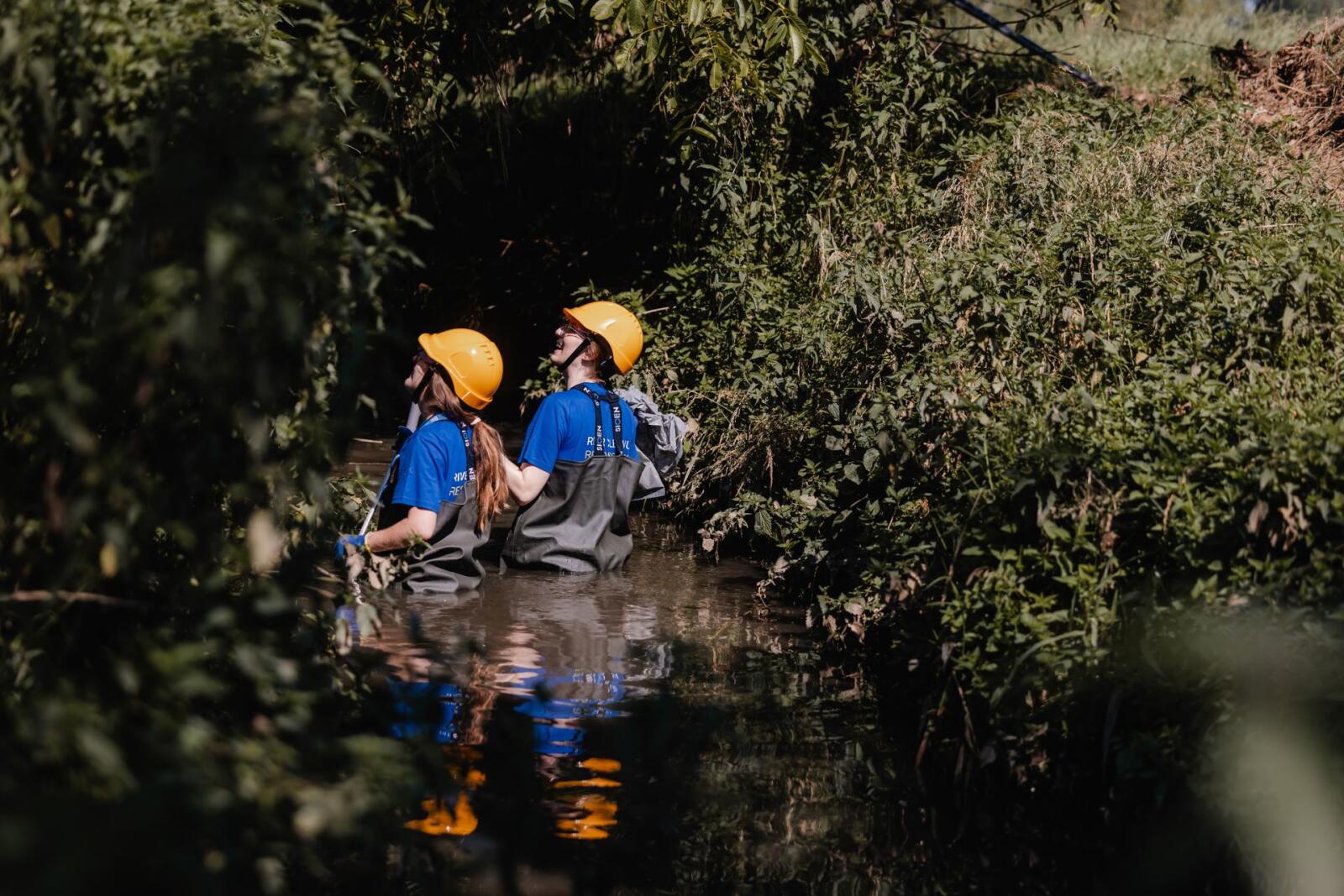
Hanne Collette, River Cleanup's Floods Project Manager, was already active on the ground following the devastating floods five years ago. This first deployment of the Response Unit inevitably brought back memories. While today's situation is fortunately very different, one lesson remains as relevant as ever: the consequences of flooding do not disappear when the water recedes.
"After the 2021 floods, we found ourselves standing in the mud among furniture, toys, and personal belongings that had been torn from people's homes by the water. Those are images that stay with you. While the situation today is fortunately different and no lives were lost, one lesson remains more relevant than ever: the consequences of flooding do not disappear when the water recedes. Today, thanks to the River Cleanup Response Unit, we can respond more quickly, more effectively, and more safely to reduce the environmental impact of flooding," explains Hanne Collette.
For Thomas De Groote, Founder and CEO of River Cleanup, the day above all represents the culmination of several years of preparation.
"This Saturday, we moved from preparation to action. Five years after the devastating floods of 2021, the River Cleanup Response Unit was deployed for the first time under real-world conditions. In the field, we found waste trapped in trees, buried in mud, and scattered along waterways. We even helped several residents clean their gardens. Seeing their relief and emotion when they saw these areas restored was particularly moving. This first intervention confirms the need to act quickly after a natural disaster, before waste becomes further dispersed and causes lasting harm to ecosystems. Today, we demonstrated that we are ready to respond when needed," he concludes.
POLLUTION THAT PERSISTS LONG AFTER THE FLOODWATERS
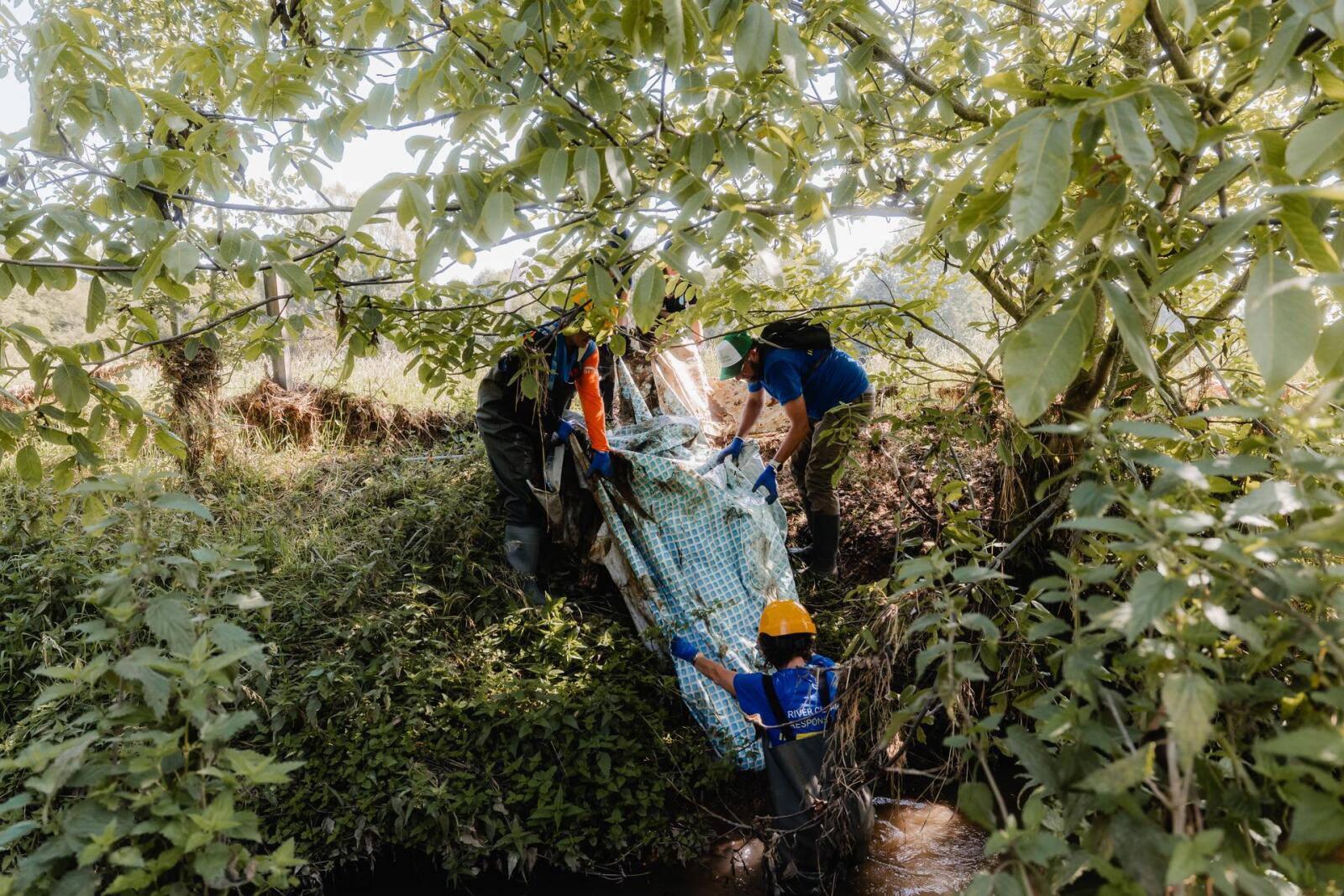
During the day, volunteers collected approximately 400 kilograms of waste. Among the most unusual items recovered were three large inflatable swimming pools, a sandbox, a power drill still in its box, a child car seat, and even a lawn mower.
These discoveries illustrate not only the force of the floodwaters that swept through the region, but also a less visible reality: weeks after the severe weather, large amounts of waste remain trapped in vegetation, along riverbanks, and in waterways.
Without intervention, some of this waste will eventually break down into microplastics or continue its journey into rivers and ultimately the North Sea. Preventing that scenario is precisely why the River Cleanup Response Unit was created.
A SECOND INTERVENTION ON JUNE 28
The work is far from finished. To continue cleaning affected areas, River Cleanup will organize a second intervention in Fleurus on Saturday, June 28.
The organization is calling on anyone who wants to take concrete action for the environment. No prior experience is required. Volunteers will be guided on-site and provided with all necessary instructions.
Because when the waters recede, the waste remains.
And everyone can help prevent it from continuing its journey into our rivers, seas, and oceans.
For more information and registration, visit the River Cleanup website. Registered participants join a volunteer list and will be notified of future Response Unit interventions.